


It’s no secret that power reclining lift chairs can make it easier for users with limited mobility to sit down and stand up. Because lift chairs provide significant physical assistance, many shoppers wonder whether Medicare will help pay for one. The answer to this frequently-asked question can seem a bit complex, but that’s exactly why we’re here to break it all down for you.
Medicare may help pay for a lift chair in specific cases, but the coverage is more limited than many people expect. The truth is that even in such instances, Medicare does not generally pay for the entire lift chair. If you meet specific medical requirements, Medicare Part B may help cover the motorized seat-lift mechanism inside the chair, however, the chair itself and its other features are not typically covered.
Read on for answers to the most common questions we hear about Medicare and lift chairs, including who may qualify, what portion may be covered, and what to confirm before starting your lift chair shopping journey. By the end, you’ll have a better idea of whether your next lift chair purchase may qualify for Medicare assistance, coverage or reimbursement. Let’s get started.
[Important disclaimer: As of the publishing of this article, Woodstock Furniture & Mattress Outlet is not a Medicare-enrolled durable medical equipment supplier. This article provides general educational information and does not constitute professional medical, insurance, billing, or legal advice. Coverage is not guaranteed, and Medicare rules, insurance requirements, and payment amounts are subject to change. Always confirm current requirements with Medicare, your Medicare Advantage plan, your healthcare provider, and/or a Medicare-enrolled durable medical equipment supplier before seeking Medicare assistance or reimbursement for your lift chair purchase.]
Does Medicare Pay for Lift Chairs?
Under Medicare, qualifying lift chairs are defined as “durable medical equipment”, or “DME” for short. This classification means that under certain circumstances, lift chairs may be at least partly covered by Medicare. However, there is a catch.
Medicare Part B may help pay for a qualifying seat-lift mechanism when it is considered medically necessary and all coverage requirements are met. That being said, Medicare generally does not pay for the rest of the upholstered chair surrounding that mechanism.
That means the following parts and features are not included in Medicare’s seat-lift benefit:
- The chair frame
- Upholstery
- Cushions and padding
- Standard reclining functions
- Power headrests or lumbar support
- Heat and massage features
- Fabric or leather upgrades
- Cup holders, charging ports, or storage compartments
- Other comfort and convenience features
In other words, Medicare limits payment for a reclining chair with a seat-lift mechanism to the amount allowed for the qualifying lift mechanism itself.
What Is a Seat-Lift Mechanism?
A seat-lift mechanism is the motorized system that raises the chair and helps move the user from a seated position toward a standing position.
For Medicare coverage, the mechanism must operate smoothly, be controlled by the user, and help the user stand up and sit down without another person physically lifting them. Medicare does not cover spring-release systems that move suddenly or create a catapult-like motion.
Most modern power lift recliners use a gradual electric lifting motion, but that feature alone does not make a chair or its owner eligible for Medicare coverage.
Who May Qualify for Medicare Lift-Chair Coverage?
Medicare’s requirements are quite specific. In general, all of the following conditions must be met:
- You have severe arthritis of the hip or knee or a severe neuromuscular disease.
- The seat-lift mechanism is part of your treating practitioner’s plan of care.
- The mechanism is prescribed to improve your condition or slow further decline.
- You are completely unable to stand from a regular armchair or another chair in your home.
- You can walk after reaching a standing position.
- Other appropriate treatments have been tried and have not allowed you to stand from a chair.
- The lift mechanism works smoothly and can be operated by you.
- The mechanism helps you stand and sit without another person’s assistance.
Unfortunately, meeting only one or two of these conditions is not enough. The medical record must support the full set of applicable coverage criteria.
Is Having Trouble Standing Enough to Qualify?
Not necessarily. Medicare draws an important distinction between having difficulty standing from a chair, and being completely unable to stand from a regular chair in the home unassisted. For example, struggling to rise from a deep-seated or low sofa may not be enough if you can stand from an ordinary armchair with an appropriate seat height.
Medicare’s current coverage policy states that difficulty standing, or even being unable to rise from a particularly low seat, does not by itself constitute the medical necessity needed to cover a lift chair. Instead, a treating medical practitioner must evaluate your condition and document how it affects your ability to stand.
Does Arthritis Automatically Qualify Someone?
Unfortunately, no. Severe arthritis of the hip or knee is one possible qualifying condition, but the diagnosis alone does not guarantee coverage.
You must also meet Medicare’s other requirements, including being unable to stand from a regular chair, being able to walk after standing, and having tried other appropriate treatments without enough improvement. Mild arthritis, back discomfort, general weakness, or age-related stiffness may not satisfy the coverage criteria.
Can Someone with a Neuromuscular Condition Qualify?
Possibly. A severe neuromuscular disease is another condition that may support coverage. However, the person must still meet the remaining requirements.
The seat-lift mechanism must be part of the prescribed treatment plan, the person must be unable to stand from a regular chair, and the person must be able to walk after being raised to a standing position. Eligibility should be evaluated by the practitioner treating or consulting on the condition.
Do I Need a Prescription?
You need an order from the practitioner treating the condition that creates the need for the seat-lift mechanism. However, please note that a prescription or written order does not guarantee that Medicare will approve the claim.
The medical record and supplier documentation must also show that the coverage requirements are met. Medical equipment suppliers billing Medicare for seat-lift mechanisms must keep documentation supporting the claim in their files.
Can Any Doctor Write Me the Order?
No. The order must come from a practitioner who is treating or consulting on the medical condition responsible for your need for a lift chair. This may include either an eligible physician or another qualified treating practitioner, depending on Medicare’s rules and the person’s care.
Even though we’re very familiar with our lift chair products as well as their features and functions, our furniture experts cannot diagnose a shopper’s medical conditions or gauge the medical necessity of a
lift chair. While we’d love to help you find the right lift chair, whether a customer qualifies for Medicare coverage is above and beyond our ability to determine.

Does Medicare Cover Power Reclining?
Medicare’s possible payment is based on the qualifying seat-lift mechanism, not the chair’s reclining features. A chair may include one or more power reclining motors, but Medicare limits payment to th
e amount allowed for the covered lift mechanism. Any additional cost incurred for reclining positions, upgraded motors, or features beyond the lift itself is generally the shopper’s responsibility.
Does Medicare Cover Heat or Massage?
Heat and massage are considered comfort features rather than part of the covered seat-lift mechanism. The same is usually true of power headrests, adjustable lumbar support, upgraded fabrics, USB charging ports, cup holders, storage pockets, and other optional features. A shopper may still choose these features, but they should not assume Medicare will contribute to their cost.
How Much Will Medicare Pay?
There is no single dollar amount that applies to every shopper. The dollar amount covered by Medicare varies based on product and policy.
For covered durable medical equipment under Original Medicare (i.e. Medicare Part B), it generally pays 80% of the Medicare-approved amount after the applicable Part B deductible has been met. The beneficiary is generally responsible for the remaining 20% when the supplier accepts assignment. For a lift chair, this percentage applies to the Medicare-approved amount for the covered seat-lift mechanism, not the chair’s full retail price.
In other words, Medicare assesses the value of the lift chair’s included seat-lift mechanism, and will pay 80% of that amount after your Part B deductible is met. The shopper is responsible for the other 20%, along with the rest of the cost of the lift chair.
As of the date of publishing, the 80% Medicare pays for the seat-lift mechanism typically amounts to no more than $200 to $300 for those shoppers who qualify and are able to jump through all the necessary hoops. Of course, this figure is just an estimate, as the actual covered amounts may be higher or lower based on policy, supplier, location, and lift chair chosen.
Realistically, your actual out-the-door cost may depend on:
- Whether you have met your Part B deductible
- Medicare’s approved amount for the seat-lift mechanism
- Whether your claim is approved
- Whether the supplier accepts Medicare assignment
- Whether you have other insurance
- Whether you have a Medicare Supplement policy
- Whether you are enrolled in Medicare Advantage
- The remaining cost of the lift chair and its features
Please ask the supplier for a written estimate before purchasing.
What Does “Accepting Assignment” Mean?
Any Medicare-enrolled supplier that accepts assignment agrees to accept Medicare’s approved amount as payment for the covered item. Medicare pays its share, and the beneficiary is responsible for the applicable deductible and coinsurance.
A supplier that does not accept assignment may charge more than Medicare’s approved amount. Depending on the situation, the customer may also have to pay upfront while waiting for the claim to be processed.
Before buying, be sure to ask:
- Are you enrolled as a Medicare durable medical equipment supplier?
- Do you accept assignment for seat-lift mechanisms?
- Will you submit the claim?
- What amount will I pay if the claim is approved?
- What amount will I owe if the claim is denied?
Can I Buy a Lift Chair from Any Furniture Store?
While you’re free to purchase a lift chair from any furniture store that sells them, it is critical to understand that Medicare will not reimburse lift chair purchases from any retailer who is not enrolled with Medicare as a durable medical equipment supplier. For that matter, even when purchasing from an approved durable medical equipment supplier, reimbursement is not guaranteed. For this reason, it is important to do your due diligence before purchasing.
Please note that a furniture store may still sell power lift recliners without being:
- Enrolled as a Medicare DME supplier
- Able to bill Medicare
- In network with your Medicare Advantage plan
- Able to prepare Medicare-specific documentation
- Able to submit a claim for the lift mechanism
To reiterate, Woodstock Furniture & Mattress Outlet is not currently a Medicare-enrolled durable medical equipment supplier. We are proud to offer our customers a large selection of power reclining lift chairs with a variety of features, from a number of manufacturers, at a range of different price points. But we are not able to process any sort of Medicare coverage or reimbursement at this time.
If you choose to go through the Medicare Part B process for your lift chair, Medicare maintains an official directory shoppers can use to locate enrolled medical equipment suppliers. Before purchasing from any retailer, please ask Medicare or your insurance plan whether the supplier and claim process meet the plan’s requirements.
Can I Submit the Receipt to Medicare Myself?
As a general rule, it’s best not to assume a store receipt will be enough.
Medicare coverage depends on the medical evaluation, written order, documentation, supplier status, billing code, and claim submission. A receipt showing that you purchased a lift chair does not prove that all coverage requirements were met.
Medicare generally advises patients to ask the provider or supplier to file the claim. When a supplier has not filed, beneficiaries should contact the supplier first and may need to call 1-800-MEDICARE for further instructions.
As we already stated above, it is strongly encouraged to confirm the procedure before buying rather than trying to assemble the claim and collect reimbursement afterward.
Does Medicare Advantage Cover Lift Chairs?
By law, Medicare Advantage plans must provide coverage for Medicare-covered Part A and Part B services, but different Medicare Advantage plans may have their own procedures.
Depending on your Medicare Advantage Plan, it may require:
- An in-network DME supplier
- Prior authorization
- A referral
- A specific medical evaluation
- Additional documentation
- A particular claim process
- Different copayments or coinsurance
Call the number on your insurance card before purchasing. Ask the representative to explain the plan’s seat-lift requirements and request they provide an answer in writing wherever possible.
Will a Medicare Supplement Plan Help?
A Medicare Supplement, or Medigap, policy may help pay some of the remaining cost-sharing for an item that Original Medicare approves. However, it generally does not turn a noncovered chair or feature into a covered item. If Medicare denies the seat-lift mechanism because the requirements were not met, a Medigap policy will not usually create coverage on its own.
Review your policy or contact the insurer for details.
Does Medicaid Cover Lift Chairs?
Medicaid is separate from Medicare, and its coverage rules vary by state and program. Some people are enrolled in both Medicare and Medicaid. Medicaid may help with certain costs or provide benefits beyond Medicare, but coverage is not automatic.
Georgia residents should contact their specific Medicaid plan or caseworker before purchasing. Be sure to ask:
- Is a seat-lift mechanism covered?
- Is prior authorization required?
- Which medical conditions qualify?
- Which suppliers can I use?
- What documentation is required?
- Must I receive approval before delivery?
What Happens If Medicare Denies the Claim?
Read the Medicare Summary Notice or your plan’s explanation of benefits. It should state why the claim was denied and explain the appeal process.
Possible reasons may include:
- The medical record did not support all coverage criteria
- The written order was incomplete
- The supplier did not meet Medicare or plan requirements
- Required authorization was not obtained
- The claim contained a billing or coding problem
- The chair was purchased before the required documentation was completed
- The person could stand from a regular chair
- The person could not walk after reaching a standing position
Contact the healthcare provider, billing supplier, Medicare, or the Medicare Advantage plan to determine what happened.
Medicare & Lift Chairs: The Bottom Line
Let’s recap.
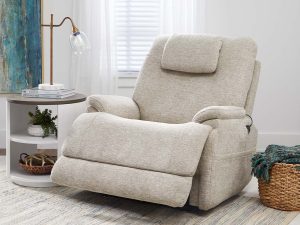
Medicare generally does not pay for an entire power reclining lift chair, only the seat-lift mechanism and only under limited conditions. When these strict medical and documentation requirements are met, Medicare Part B may help pay for no more than 80% of the seat-lift mechanism inside the chair. The upholstered chair itself, reclining functions, and comfort upgrades are all the customer’s sole responsibility.
Due to the limited financial assistance, extensive medical documentation requirements, and lengthy approval process, a substantial number of lift chair shoppers either don’t meet Medicare’s strict reimbursement criteria or they otherwise decide that pursuing Medicare coverage or reimbursement is not worth the trouble. Still not sure if you qualify for Medicare assistance for your lift chair purchase or whether it’s worth the hassle in your specific case? You won’t want to miss our follow-up guide to Medicare lift chair coverage vs self-pay to help you decide.
If you’ve decided to seek Medicare assistance in your purchase of a lift chair, we recommend speaking with the practitioner treating your condition, contacting Medicare or your Medicare Advantage plan, and confirming the requirements with a Medicare-enrolled DME supplier found here. Just put in your ZIP code and search by "seat lift mechanisms".
For all others, we invite you to swing by any of our North Georgia and Metro Atlanta furniture stores to see our broad selection of power reclining lift chairs at our everyday low prices. Hope to see you there!
[Important Disclaimer: As of the publishing of this article, Woodstock Furniture & Mattress Outlet is not a Medicare-enrolled durable medical equipment supplier. Woodstock Furniture & Mattress Outlet is not affiliated with, endorsed by, or acting on behalf of Medicare, Medicaid, the Centers for Medicare & Medicaid Services, or any private insurance company. We cannot determine eligibility, submit medical documentation on a customer’s behalf, or guarantee coverage or reimbursement.]